
 Poradmin

Timber, glue, nails, glass and finishing materials have been treated as direct materials because they all become part of finished and ready to sell table. The conversion cost, when used in conjunction with prime cost, helps reduce waste and gauge other operational inefficiencies that may be present within the manufacturing facility. If your conversion goal is more than just a website visit, look at your landing pages. Confirm that the landing page is relevant to the viewers and encourages them to complete the action that is your goal. For example, if your conversion metric is signing up for your email list, the signup form should be prominent. How to assess conversion cost if it is watching a video, the video should be prominent.
The $20,000 cost for utilities and insurances related to production are also manufacturing overhead, which are production costs. In other words, prime costs are the direct materials and direct labor costs incurred in the manufacturing process. The greater the ratio of prime costs over total costs the higher the chance a firm’s product cost accuracy is.
In this case, although the formula may seem simple compared to others that we can know in the economic field, determining costs that have some relation to the conversion process is a task that needs a good analysis. These costs are mainly made up of two costs, on the one hand that of labor and on the other hand that related to the transformation or manufacturing process. Factory outlay are classified in the regular way as indirect costs or overheads. One of the most important pieces of information you can get from the values of conversion cost is whether your marketing campaign is profitable and, therefore, worth the effort.
The cost of a product is determined by the amount of labor and overhead needed to convert raw materials into finished goods. Conversion costs include all direct or indirect production costs incurred on activities that convert raw material to finished goods. Direct labor is the cost that a manufacturing entity incurs for wages, salaries and benefits provided to production workers i.e., the workers who directly and physically conversion cost formula handle the manufacturing process in a facility. Examples of direct labor workers include welders, machine operators, assemblers and painters etc. In manufacturing sector, the basic production costs can be categorized differently depending on the purpose and use of categorization. This categorization is helpful in determining the efficiency of manufacturing facilities and processes in producing their output.
The true cost a company uses in the process of turning raw materials into finished goodsincludes both overhead and direct labor. Managerial accountants and production managers measure these conversion costs to estimate production expenses, develop product-pricing models, and estimate the value of finished inventory. Managers also use these costs to evaluate the efficiency of the production process and identify waste. The total materials costs for the period (including any beginning inventory costs) is computed and divided by the equivalent units for materials.
The total of the cost per unit for material ($1.17) and for conversion costs ($2.80) is the total cost of each unit transferred to the finishing department ($3.97). Therefore, one difference between the two concepts is that manufacturing overhead is only included in conversion costs. The other difference is that the cost of direct materials is only included in prime costs. Thus, each cost concept provides a somewhat different view of the costs incurred to create products. According to Accounting Coach, conversion costs refer to the costs involved in converting raw materials into finished goods. Conversion costs are the summation of direct labor costs and manufacturing overheads.
Prime costs are all of the costs that are directly attributed to the production of each product. Prime costs are direct costs, meaning they include the costs of direct materials and direct labor involved in manufacturing an item. You could use that information as an inspiration to make changes and see if you can improve it. Bruce’s Bike Company is a bicycle manufacturer that specializes in high-end 10-speed bikes.
Prime costs and conversion costs include some of the same factors of production expenses, but each provides a different perspective when it comes to evaluating production efficiency. Only the costs of raw materials and direct labor are used in the prime cost formula. Labor is sometimes a little more complicated to define because, for many companies, the contributions of several different types of employees are crucial to the creation of the end product. However, the definition of a labor expense used in the prime cost formula includes wages paid only to those employees who directly participate in the building, formation, or assembly of an item for sale.
Companies that manufacture inventory rely largely on metrics to track production and analyze the efficiency with which inventory is manufactured and sold. Conversion costs are one of the most widely used metrics for this.This indicator refers to the costs of converting raw materials into sellable goods. In this post, we will define conversion cost, describe common ones that a business may face, the formula for calculating it, and provide examples of how to use it for accounting in your firm. Conversion cost gets its name because the costs that make up conversion cost are all the costs incurred to convert raw material into a finished good. It is the direct labor plus any manufacturing overheads needed to convert raw materials into a finished product.

Poradmin

In other words, conversion costs are costs incurred by a manufacturer other than the cost of direct materials. Notice that the actual costs of the necessary raw materials are not included in conversion costs. But we want to focus on what is included in conversion costs, so let’s look into what makes up direct labor costs and manufacturing overhead costs. In cost accounting, conversion costs are all the costs incurred to convert raw materials into a finished good. In such cases, it is time-saving to calculate equivalent units and unit costs by combining direct labor and manufacturing overheads instead of doing separate calculations for the two cost items. We used this formula to calculate conversion costs, but it can also be used to find one of the missing variables, such as direct labor costs or manufacturing overhead costs.
Direct materials comprise tangible components, such as raw materials, that are required to generate a final product. The engine of a car, for example, and the spokes of a bicycle are both included in direct material costs. This is because they are both required to complete the production of that specific item.
This includes wages for workers (direct labor costs) and other production expenses (manufacturing overhead costs). In simpler terms, direct labor costs are the payments to the workers doing the hands-on work, while manufacturing overhead costs are the behind-the-scenes expenses that keep the entire production process going. Both are essential components of conversion costs, giving a complete picture of the money spent to transform raw materials into finished products. Conversion costs are the labor and overhead expenses that “convert” raw materials into a completed unit.
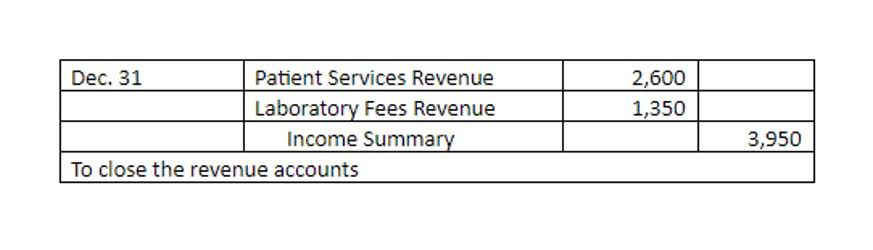
Period costs are recorded in the profit and loss statement of an organization. One can arrive at total period costs by closely monitoring and reporting the expenses that aren’t related to manufacturing a product. The conversion costs would also help in calculating the cost of goods sold (COGS) conversion cost formula accurately. Conversion costs must be determined by each organization since they are critical for making significant business decisions and performing basic accounting procedures. It is calculated to determine the cost per unit, which aids the corporation in determining a price for the product.
Examples of employees in this category are managers, nurses, security guards, janitors, cooks, maintenance workers, accountants, executives, trainers, parking attendants, and secretaries. Conversion Cost is the total money a company spends to transform raw materials into finished products. It includes direct labor (workers’ pay) and manufacturing overhead (other production expenses). Conversion Costs can be defined as the aggregated costs that include direct labor, and manufacturing overhead costs. They are referred to as the manufacturer’s production related cost, which does not include the costs incurred in production of direct materials. The calculation for prime costs includes the amounts spent on direct materials and direct labor.

The frames and lenses are direct materials and are not included in conversion costs. The $200,000 paid to production workers is direct labor, which is a conversion cost. The $50,000 paid to the production manager is manufacturing overhead, which is a conversion cost. The $200,000 cost for renting the production facility is part of manufacturing overhead costs, which are conversion costs.
Conversion costs are vital to be calculated by each companysince they are fundamental for making important business decisions and carryingout basic accounting tasks. It is calculated by dividing the total cost of a marketing campaign by the number of conversions. For example, if a campaign costs $1000 and generates 100 conversions, the CPC would be $10. The cost of manufacturing a product cannot be traced to just one unit in the process. Some common examples are insurance, building maintenance, machine breakup, and taxes on equipment or machining.
Tangible components—such as raw materials—that are needed to create a finished product are included in direct materials. The expenses and remunerations attached to workers and employees who merely support the production facility and are not actively involved in converting materials into ultimate product are not included in direct labor cost. Rather, such expenses are considered as indirect labor which goes to the entity’s total manufacturing overhead cost (discussed later in this article). Examples of such expenses include the salaries of production supervisor and factory watchman etc. Some of the same expenses are included in both prime costs and conversion costs.
Direct materials are the actual raw materials that make up the finished product. Direct labor is the cost of the production floor workers that can be directly traced to the manufactured product. Manufacturing overhead includes all other production costs that can’t be easily identified or traced directly to the product, such as indirect materials, rent, utilities, and the production floor manager’s salary. The actual wood and metal used for the chair are considered direct materials. The workers who get paid hourly to assemble a chair out of the wood and metal are considered direct labor.
Poradmin

Begin by detailing the job description, responsibilities, and expectations. The Employee agrees that they are fully authorized to work in [country] and can provide proof of this with legal documentation. This documentation will be obtained by the Employer for legal records. D) Choose arbitration if disputes will be resolved by a neutral third party selected by the parties, who evaluate the argument and determine a settlement. B) Choose this option if the employee is not entitled to severance after termination. A) Choose this if the employer can terminate the employment without cause.
The law changed in 2021 in NC regarding how to handle changes or reductions in wages. As a small business, you likely have many legal processes to worry about. One of the most important is putting contracts in place that will protect your company if something goes wrong.
Should the Company require travel by the Employee, the Company shall reimburse the Employee for such travel expenses, along with reasonable lodging and meal expenses upon presentation of receipts for such expenses. WHEREAS, the Company is engaged in the description of business; and WHEREAS, the Company desires to employ and retain the Services of the Employee according to the terms and conditions herein. Sign up to receive more well-researched small business articles and topics in your inbox, personalized for you.
This freelance recruiter agreement template can be used by a freelance recruiter to establish a formal agreement for recruiting services. Anti-corruption policies are documents that https://www.bookstime.com/articles/prepaid-insurance-definition-and-examples businesses use to deter and prevent employee corruption. Any business can utilize this template to develop its Anti Corruption Policy by altering and expanding it as necessary.
Any and all general driving policies that the Company may at any time implement must be followed by the Employee when using this vehicle. For Employees who require a parking spot for such use, the parking space must be chosen, managed, and upgraded in accordance with the Company’s business automobile policy. employee contracts for small business The personal expenses policy initiatives states that the Business must incorporate this. The Employee shall maintain a list of compensated expenses which the Company shall classify and document as additional pay and which the Employer shall treat as deductible in the remuneration structure of expenditures.
The company that got $250M+ in federal contracts.
Posted: Wed, 14 Feb 2024 08:00:00 GMT [source]
The court could also order specific actions, like contract reformation. An employment contract can be amended, but a new one needs to be drawn up. The employment agreement example below details an agreement between the employer, Susan C Clarke, and the employee, Rudolph M Hettinger. Susan C Clarke agrees to employ Rudolph M Hettinger as a Personal Assistant. Filter through the received job applications, setting aside the ones that meet the job’s essential requirements.

Generally, at the end of a probationary period, the employer will review the employee’s performance to determine if they continue employment as a regular employee. Let’s look at the five common types of small business employment agreements and how owners can take steps to draft them, including help from professionals who know small business contracts. Like other small business contracts, employment agreements are used to protect your business if something goes wrong.
Poradmin

Want to look more polished, save more time, and conquer cash flow? Send invoices whenever and wherever you want with Wave’s free app for iOS and Android. “It’s not just a cool piece of software, it is giving peace of mind to people.” You deserve to know your taxes aren’t something you have to sweat over the entire calendar year.” Wave has helped over 2 million North American small business owners take control of their finances. Wave has helped over 2 million small business owners in the US and Canada take control of their finances.
Create beautiful invoices, accept online payments, and make accounting easy—all in one place—with Wave’s suite of money management tools. Get paid in as fast as 1-2 business days1, enhance your brand, and look more professional when you enable payments. Customers can click a Pay Now button on invoices and pay instantly by credit card, secure bank payment (ACH/EFT), or Apple Pay. You can accept credit cards and bank payments for as little as 1%2 per transaction.
Set up recurring invoices and automatic credit card payments for your repeat customers and stop chasing payments. 1 Payouts are processed in 1-2 business days for credit card payments and 1-7 business days for bank payments. Deposit times may vary due to processing cutoff times, third party delays, or risk reviews. Manually creating invoices in Microsoft Word or Excel can be time-consuming and difficult to manage.

Our servers are protected physically and electronically. Any connections between you, your bank accounts, and Wave are cash flows protected by 256-bit SSL encryption. Wave is a PCI-DSS Level 1 Service Provider.
It keeps me on track and takes a lot out of my hands. All your invoicing and payment information automatically syncs with Wave’s accounting feature. We built our payroll tool for small business owners, so it’s easy to use AND teaches you as you go. Give your customers the option of paying with one how to choose a fiscal year click using a credit card, bank transfer, or Apple Pay. “Wave invoicing makes your life a whole lot easier and takes that worry off you. I’ve tried Quickbooks—it’s a bit more complicated and technical, and takes more time to set up.”
Our robust small business accounting reports are easy to use and show month-to-month or year-to-year comparisons so you can easily identify cash flow trends. Connect your bank accounts in seconds with the Pro Plan. Transactions will appear in your bookkeeping automatically, and you’ll say goodbye to manual receipt entry. With the Pro Plan, automatically import, merge, and categorize your bank transactions. It’s always available, and it’s backed up for extra peace of mind. 2 Rates are 1% for bank payments (minimum fee of $1).
For example, the rate a freelance web developer charges may be different than that of a freelance graphic designer, because each freelancer specializes in a different area. The Wave app lets you easily generate and send invoices to your clients wherever and whenever you need to. A common issue when invoicing in Microsoft Word, Excel, or other DIY solutions is making calculation errors. Wave’s invoicing software for small businesses removes the worry of making these errors because calculations are done for you, including the taxes.
Digital invoicing empowers your small business by automating invoice processing and saving time by tracking key invoice data like upcoming and outstanding invoices. You can also manage late payments more efficiently through e-invoicing by setting up payment reminders to send to your customers before an invoice due date. Approval to use online payments is what is the process of accounting subject to eligibility criteria, including identity verification and credit review. You’ll need to answer a few questions about your business and provide us with a little more information about yourself in order to get approved to accept online payments. We provide different levels of support, depending on the plan and/or the add-on features you choose. Learn more about how Wave support works here.
Accounting software helps business owners understand how money flows in and out of their businesses. This can help you save time and make financial decisions quickly. You can effectively analyze the financial health of your business, find ways to generate more profit, and move forward with your business plan. Electronic invoices are created with online invoicing software or other cloud-based services, which makes it easy to automate the invoicing process. Get paid on time and stop chasing clients. With Wave’s Pro Plan, you can set up recurring invoices and automatic credit card payments for your repeat customers.
Poradmin
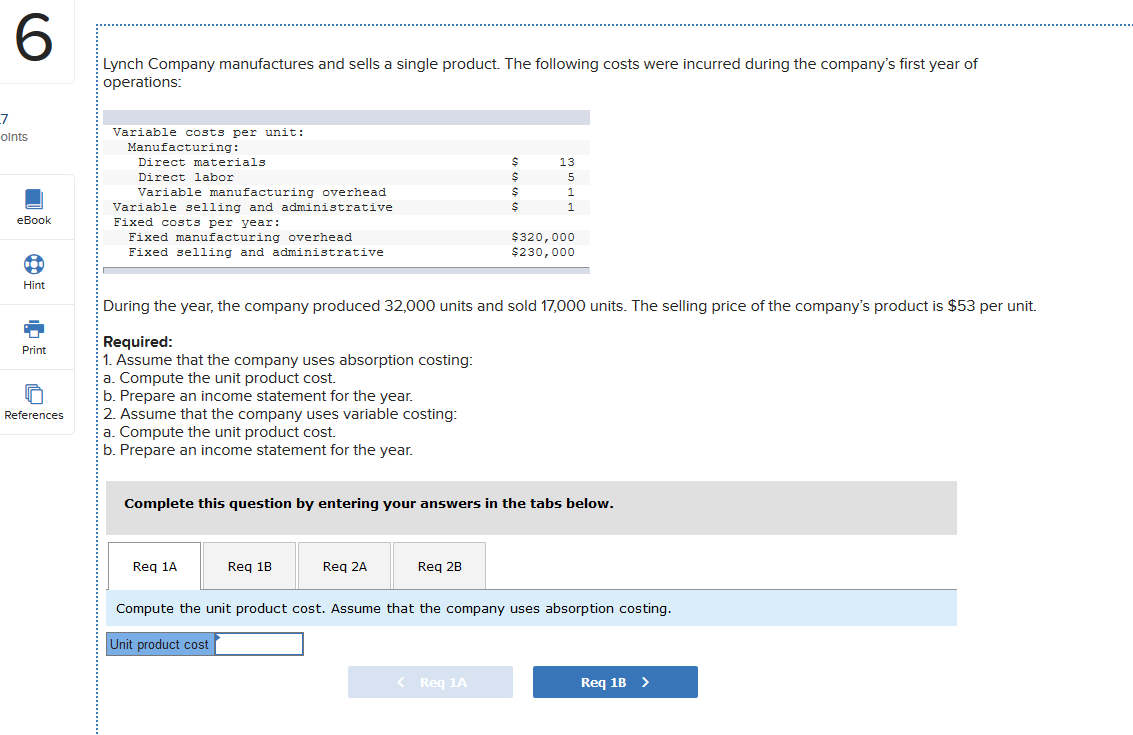
Do you still have questions about variable costs and how they affect your business profitability? Of course, you don’t want to charge too much and risk losing business to better-priced competition. Using the variable cost formula will help you find the sweet spot between charging too much and too little, ensuring profitability for your business. To better explain this concept and differentiate variable and fixed costs, we’ll use a few examples to help you understand how they may apply to your industry. The cost to package or ship a product will only occur if a certain activity is performed.
You’ll need variable cost data to make the right decision in this scenario, which will greatly impact profitability and leverage. Where average variable cost is most useful, however, is when you’re trying to calculate your average costs while accounting for multiple products with different variable costs per unit. Even though the amount it costs to produce a single unit of your product is fixed, the overall cost is variable, since the total amount will change depending on how many units you’re producing. This differs from fixed costs like rent or insurance, which will remain the same regardless of your company’s activity. Since fixed costs are more challenging to bring down (for example, reducing rent may entail the company moving to a cheaper location), most businesses seek to reduce their variable costs. Direct costs can also be fixed costs, such as rent payments that are directly tied to a production facility.
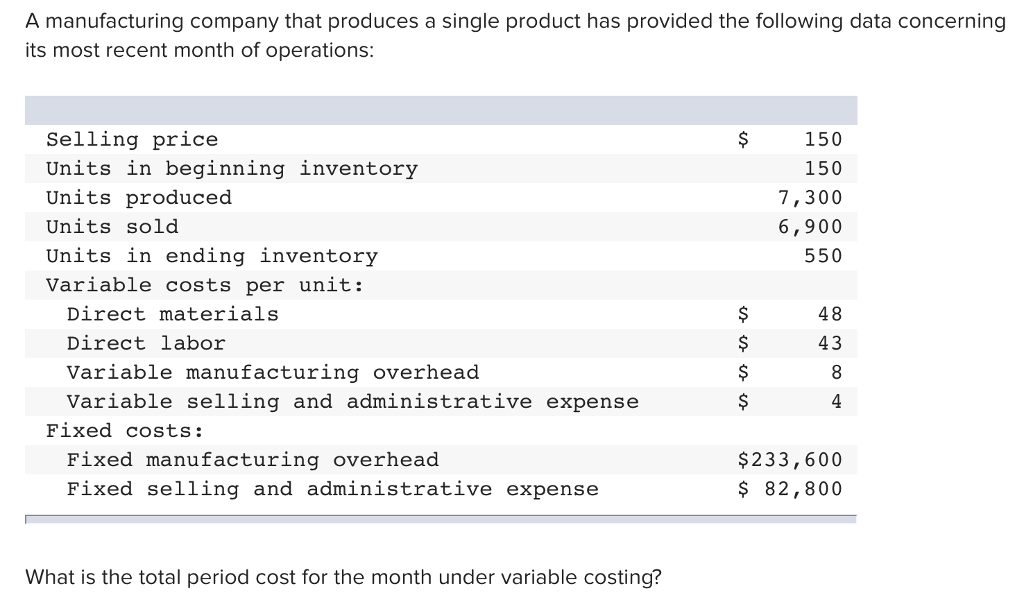
Materials that were used to build the product, such as wood or gasoline, might be directly traced but do not contain a fixed dollar amount. This is because the quantity of the supervisor’s salary is known, while the unit production levels are variable based upon sales. A fixed budget is a financial plan that allocates a fixed amount of money for specific expenses, regardless of fluctuations in sales or production levels. In contrast, a variable budget adjusts the allocation of funds based on actual sales or production activity, making it more flexible and responsive to changes in the business environment. These ratios help measure profitability and the efficiency of cost management. For example, a higher gross margin indicates that a company can generate more profit for each dollar of revenue by lowering its variable costs.
Notice how the total variable cost goes up according to the number of contracts, much like in the previous example. The longer your production facility is actively operating, the more power and water it’s likely to use. Utilities are a variable cost because they usually increase and decrease alongside your production. Production supplies and equipment refers to any necessary supplies or equipment that fluctuate with your output level. For the chair company, an example would be oil for machines involved in the woodworking process. If the company makes more chairs, they’ll need more machine oil, making this a variable cost.
If only one window is to be installed on the building and the other is to remain in inventory, consistent application of accounting valuation must occur. Especially if you run a smaller, home-based ecommerce business, like an Etsy store, you may avoid many of the costs other ecommerce stores deal with. Our team is ready to learn about your business and guide you to the right solution. Bench simplifies your small business accounting by combining intuitive software that automates the busywork with real, professional human support.
Similarly, streamlining production processes can also lead to decreased costs per item. Economies of scale refer to the cost advantage that companies achieve when production becomes efficient, leading to a reduction in the cost per unit as production volume increases. This, in turn, will raise the cost per unit, leading to higher variable costs for businesses reliant on that material. are direct materials variable costs The total variable cost for this order of 30 chairs would be $1,500, meaning the chair company’s gross profit for the order would be $900 ($2,400 – $1,500). Raw materials are the direct goods purchased that are eventually turned into a final product. If the athletic brand doesn’t make the shoes, it won’t incur the cost of leather, synthetic mesh, canvas, or other raw materials.
In summary, variable costs are directly tied to the production levels of goods or services, and they play a crucial role in determining profits. Examples of variable costs include raw materials, direct labor, commissions, credit card fees, and utility expenses. Managing these costs effectively is essential for long-term business success. Variable costs are expenses that change in proportion to the production volume or activity level of a business, such as raw materials, direct labor costs, and sales commissions. They increase or decrease directly based on the quantity of output or level of production. Variable costs are proportional to the volume of activities, increasing or decreasing as the business output changes.
A company must still pay its rent for the space it occupies to run its business operations irrespective of the volume of products manufactured and sold. In general, it can often be specifically calculated as the sum of the types of variable costs discussed below. Variable costs may need to be allocated across goods if they are incurred in batches (i.e. 100 pounds of raw materials are purchased to manufacture 10,000 finished goods). For example, a company produces mobile phones and has several production machines to produce their devices. The cost of electricity is an indirect cost since it can’t be tied back to the product or the specific machine.
Poradmin

The exact proportions of the credits and debits in step 2 depend on a number of factors and will vary from lease to lease. It is important to check with your accountant or bookkeeper for their advice regarding how to record operating leases lasting more than 12 months under the new standards in your accounting. It is important to note your operating lease payments will still be recognized as an expense on your P&L, regardless of whether http://naturalclub.ru/act/index.php?id=1037 your operating lease must be capitalized. The new FASB guidance states lessees must recognize assets and liabilities for all leases with terms of more than 12 months. This applies to both capital and operating leases—a change from long-standing generally accepted accounting principles (GAAP), which only required the capitalization of capital leases. So how do these types of leases affect your income statements and balance sheets?
You may also need to buy insurance to guarantee that the asset will have a specified value at a future date. Get help from a financial institution and your attorney for this process. For accounting purposes, a capital lease (sometimes called a “finance lease”) is reflected on the company’s balance sheet as an asset, with a value determined by the regulations for setting a cost basis for the asset.
Likewise, operating leases do not need to be reported as a liability on the balance sheet, as they are not treated as debt. The firm does not record any http://www.introweb.ru/inews/?tag=2572 depreciation for assets acquired under operating leases. In the operating lease scenario, the lease expense is constant throughout the lease term.
In some lease agreements, the payment is due at the end of the year, so the lease liability account balance would equal the equipment account balance in this initial entry. The cash entry would not be required at this point, but at the end of the year upon payment. A capital lease is a type of lease agreement where the lessee (the company or individual renting the asset) assumes the risks and rewards of ownership of the leased asset. The lessee treats the leased asset as if they purchased and financed it through the lease agreement. For accounting purposes, operating leases aren’t shown on the business balance sheet, but the lease payments are included on the business profit and loss statement. The Financial Accounting Standards Board (FASB) issued new accounting rules in 2016 for leases.
FASB has issued accounting standards related to leases, including ASC 840 and ASC 842, which govern the accounting treatment of capital leases. ASC 842 replaced ASC 840 at the end of 2018 and is now considered the standard that all U.S. businesses must adhere to. It’s important to note that by recognising both the leased asset and the lease liability on the balance sheet, capital leases can have a significant impact on a company’s financial ratios and financial position. When it comes to differentiating between capital lease vs operating lease, IFRS does not recognize this classification. Both types are treated as a finance lease, and the lessees are entitled to record them on the balance sheet. Operating leases allow companies greater flexibility to upgrade assets, like equipment, which reduces the risk of obsolescence.
For lessees governed by ASC 842, leases are deemed either finance or operating based on the criteria outlined below. At Lendio, we’re here to make the process of acquiring business equipment as straightforward and cost-effective as possible. Visit http://www.old-kirkcudbright.net/extracts-articles/books/burghlife/ our equipment financing page to learn more about how we can help your business grow. Depreciation refers to the gradual loss of value of an asset, such as a piece of equipment, over time due to usage, wear and tear, obsolescence, or age.
We need to calculate the present value of operating lease commitments to arrive at the debt value of the lease. The remaining input data can be found in the company’s financial statements or the notes to the financial statements. Operating Leases and Capital leases are both very common in modern-day business practice, however, there are some key differences between both of them. A lot of companies prefer to work with an operating lease because they are relatively easier to obtain, and do not require a large commitment from either the company or the investor. In an operating lease, the lessee must maintain the property and return it or an equivalent at the end of the lease in as good a condition and value as when leased. For the remainder of the lease term, the imputed interest expense will be calculated using the same methodology in order to determine the interest expense paid per year.
Poradmin
Markets for some toxic assets froze in 2007, and the problem grew much worse in the second half of 2008. Several factors contributed to the freezing of toxic asset markets. The value of the assets were very sensitive to economic conditions, and increased uncertainty in these conditions made it difficult to estimate the value of the assets. Banks and other major financial institutions were unwilling to sell the assets at significantly reduced prices, since lower prices would force them to reduce significantly their stated assets, making them, at least on paper, insolvent. Legacy systems, including mainframe computers or proprietary software, can become toxic assets.
Running unsupported software poses significant risks, as vulnerabilities are left unpatched, making the organization more susceptible to cyber threats and data breaches. For instance, servers, laptops, or networking devices that lack modern features, performance capabilities, or compatibility with new software and applications can hinder productivity and increase maintenance costs. Keeping such hardware in operation can be inefficient and lead to compatibility issues with newer technology. If the government provided credit to private investors who put up cash to buy toxic asses, the private investors would take the first loss. But with a non-recourse loan the government on the hook if the value of the toxic assets fell by too much.
If Mr. Smith defaults on the loan, the owner of the mortgage-backed security (ABC Bank) will stop receiving the payments. However, if house prices have declined, it will only recover a fraction of the money. Other reasons that have been cited include the fact that Lehman Brothers was highly reliant on short-term funding, which became increasingly difficult to obtain as the financial crisis unfolded.
Your attorney can provide you with legal advice, research, and guidance to help with your claim. If you need to file a lawsuit and appear in court, your attorney can represent you during that process. Every time you see foreclosure signs littering neighborhoods, you’re probably looking at the makings of a toxic https://turbo-tax.org/ asset, reports CBS News correspondent Bianca Solorzano. New issues of these bonds fell precipitously in mid-2007, and haven’t really come back, Jerome Fons, a consultant who used to work at Moody’s, told me. But the ratings agencies have continued to downgrade the bonds packaged and sold during the boom.
This can lead to increased downtime, longer resolution times for issues, and higher maintenance costs. April 16, 2010 • A toxic asset like one purchased by NPR’s Planet Money is the https://simple-accounting.org/ subject of a lawsuit. A New Jersey carpenters union invested $100,000 in a mortgage-backed bond now worth $5,000. July 22, 2010 • We bought a toxic asset full of mortgages gone bad.
These systems may lack modern integrations, scalability, or flexibility to meet evolving business needs. Maintaining and supporting legacy systems can be expensive, resource-intensive, and limit the organization’s ability to adopt newer technologies. After the Treasury Department released its plan today to rid banks of so-called “toxic assets” by enticing private investors to partner with the government, Paul Solman answered questions on the basics of the plan. Toxic assets are investments that are difficult or impossible to sell at any price because the demand for them has collapsed. There are no willing buyers for toxic assets because they are widely perceived as a guaranteed way to lose money.
There was never much of a secondary market for these bonds, Fons said — most people who bought them held onto them. About $500 million of private-label RMBS trade in a typical day, https://online-accounting.net/ according to the guys at Mission Peak Capital who helped Planet Money buy a toxic asset. That number may sound big, but there are about $4 trillion of these bonds outstanding.
Outdated hardware may lack modern security features, increasing the chances of data breaches. Compromised data security can result in financial losses, reputational damage, and legal consequences. So long as the government is committed to protecting the banking system’s creditors – depositors, money market funds and bondholders – from losses, the government already has most of the downside risk on these toxic assets. As a result the government is already on the hook it the banks’ end up taking additional losses on their toxic assets.
Toxic assets can compromise data security and expose organizations to cyber threats. Outdated software may lack essential security patches, making it more susceptible to vulnerabilities and potential breaches. Inadequately secured hardware can lead to unauthorized access or data leaks. These security risks can result in significant financial and reputational damage to the organization. Toxic assets in ITAM are assets that no longer provide value or have become problematic to maintain and manage effectively. These assets can include outdated hardware, unsupported software, legacy systems, or devices with significant security vulnerabilities.
On 15th September 2008, it was curtains for the bank as it filed for Chapter 11 bankruptcy protection, which allows a company to reorganise and devise a plan to pay back its creditors. The fall of the investment banking giant precipitated the financial crisis worldwide and a loss of confidence among major banks and a major financial crisis throughout the world. But if you go into foreclosure and the price of your home drops below the value of the loan itself, then that asset, namely the mortgage, is losing money.
There simply isn’t enough equity left to offer the taxpayers much of a cushion against further losses (in world where the banks’ creditors are protected). If the taxpayer puts in new equity to allow the bank to remain adequately capitalized after the existing private equity is written down to cover past losses, the taxpayer should get a large share of the upside. The rating agencies had a critical role to play, in that they validated the construction of the sub-prime CDOs and graded the tranches. Securitisation is achieved by transferring the lending to specifically created companies called ‘special purpose vehicles’ (SPVs). In the case of conventional mortgages, the SPV effectively purchases a bank’s mortgage book for cash which is raised through the issue of bonds backed by the income stream flowing from the mortgage holder. In the case of sub-prime mortgages, the high levels of risk called for a different type of securitisation, achieved by the creation of derivative-style instruments known as ‘collateralised debt obligations’ or CDOs.
The holder of a toxic asset finds that it is no longer possible to sell it at a satisfactory price. Until then, we get a little money every month from people paying off their mortgages. Toxic assets claims can involve a number of complex financial and legal issues. You may need to hire a finance lawyer in your area if you need assistance with any type of legal dispute over assets.
David Brooks reports that the Treasury is shying away from guaranteeing a lot of the assets on the banks’ balance sheet for this reason. Toxic assets — home mortgages packaged into complicated bonds that no one wanted to touch when the housing bubble collapsed — are starting to trade again. March 12, 2010 • Remember those complicated bonds full of home mortgages? A team of reporters with NPR’s Planet Money used $1,000 of their own cash to buy a tiny piece of one — and plan to track it until it dies. September 17, 2010 • Back in the day, Planet Money’s pet toxic asset seemed like a benign way to help more people buy houses.
Poradmin

This formula is best for companies with assets that will lose more value in the early years and that want to capture write-offs that are more evenly distributed than those determined with the declining balance method. This method often is used if an asset is expected to lose greater value or have greater utility in earlier years. Some companies may use the double-declining balance equation for more aggressive depreciation and early expense management.
Software makes it easy to track and calculate the depreciation of your small business assets. Track your mileage for vehicles with the mileage tracking app, organize your assets to measure depreciation, and make tax season a breeze with automated financial report generation. In closing, the key takeaway is that depreciation, despite being a non-cash expense, reduces taxable income and has a positive impact on the ending cash balance. The recognition of depreciation on the income statement thereby reduces taxable income (EBT), which leads to lower net income (i.e. the “bottom line”). If a manufacturing company were to purchase $100k of PP&E with a useful life estimation of 5 years, then the depreciation expense would be $20k each year under straight-line depreciation. Depreciation calculations determine the portion of an asset’s cost that can be deducted in a given year.
Total units to be consumed is the amount of value you expect from the asset, measured in units. For example, if you purchase a machine and you expect it to make 100,000 products, you would have 100,000 total units to consume. Subtract salvage value from asset cost to get the total value that this asset will provide you over its lifespan.

For 2022, the new Capex is $307k, which after dividing by 5 years, comes out to be about $61k in annual depreciation. In turn, depreciation can be working capital formula projected as a percentage of Capex (or as a percentage of revenue, with depreciation as an % of Capex calculated separately as a sanity check). In terms of forecasting depreciation in financial modeling, the “quick and dirty” method to project capital expenditures (Capex) and depreciation are the following. Therefore, $100k in PP&E was purchased at the end of the initial period (Year 0) and the value of the purchased PP&E on the balance sheet decreases by $20k each year until it reaches zero by the end of its useful life (Year 5). While technically more “accurate”, at least in theory, the units of production method is the most tedious out of the three and requires a granular analysis (and per-unit tracking). The core objective of the matching principle in accrual accounting is to recognize expenses in the same period as when the coinciding economic benefit was received.
You’ll usually record annual depreciation so you can measure how much to claim in a given year, as well as accumulated depreciation so you can measure the total change in value of the asset to date. Since double-declining-balance depreciation does not always depreciate an asset fully by its end of life, some methods also compute a straight-line depreciation each year, and apply the greater of the two. This has the effect of converting from declining-balance depreciation to straight-line depreciation at a midpoint in the asset’s life. There are several different depreciation methods, including straight-line depreciation and accelerated depreciation.
United States rules require a mid-quarter convention for per property if more than 40% of the acquisitions for the year are in the final quarter. Cost generally is the amount paid for the asset, including all costs related to acquiring and bringing the asset into use.7 In some countries or for some purposes, salvage value may be ignored. The rules of some countries specify lives and methods to be used for particular types of assets. However, in most countries the life is based on business experience, and the method may be chosen from one of several acceptable methods. This formula will give you greater annual depreciation at the beginning portion of the asset’s useful life, with gradually declining amounts each year until you reach the salvage value. A depreciation schedule is a schedule that measures the decline in the value of a fixed asset over its usable life.
If you don’t depreciate your asset, you won’t be able to claim the full benefit of the depreciation tax deduction. This deduction relies on claiming annual depreciation—since you can’t claim the full depreciation amount all in one year, you’ll lose out on potential tax benefits. Depreciation is listed as an expense on your income statement since it represents part of the asset cost allocated how much does an employer pay in payroll taxes to the period. It’s not an asset or a liability itself, but rather an accounting tool used to measure the change in value of an asset.
But, in most cases, the cost of the asset must be spread out over time; this is called asset depreciation. (In some instances, a business can take the entire deduction in the first year, under Section 179 of the tax code.) The IRS also has requirements for the types of assets that qualify. But in practice, most companies prefer straight-line depreciation for GAAP reporting purposes because lower depreciation will be recorded in the earlier years of the asset’s useful life than under accelerated depreciation.
Depreciation allows you to reduce your taxable income by claiming depreciation prepaid isurance – market research as an expense, minimizing your total tax bill. The assumption behind accelerated depreciation is that the fixed asset drops more of its value in the earlier stages of its lifecycle, allowing for more deductions earlier on. Businesses have some control over how they depreciate their assets over time. Good small-business accounting software lets you record depreciation, but the process will probably still require manual calculations. You’ll need to understand the ins and outs to choose the right depreciation method for your business.
Poradmin
Retained earnings are calculated by subtracting dividends from the sum total of retained earnings balance at the beginning of an accounting period and the net profit or (-) net loss of the accounting period. In financial modeling, it’s necessary to have a separate schedule for modeling retained earnings. The schedule uses a corkscrew-type calculation, where the current period opening balance is equal to the prior period closing balance. In between the opening and closing balances, the current period net income/loss is added and any dividends are deducted.
Retained earnings are a clearer indicator of financial health than a company’s profits because you can have a positive net income but once dividends are paid out, you have a negative cash flow. Retained earnings are affected by an increase or decrease in the net income and amount of dividends paid to the stockholders. Thus, any item that leads to an increase or decrease in the net income would impact the retained earnings balance. Thus, retained earnings are the profits of your business that remain after the dividend payments have been made to the shareholders since its inception.
The decision to retain the earnings or to distribute them among shareholders is usually left to the company management. However, it can be challenged by the shareholders through a majority vote because they are the real owners of the company. If you calculated along with us during the example above, you now know what your retained earnings are. Knowing financial amounts only means something when you know what they should be. While the term may conjure up images of a bunch of suits gathering around a big table to talk about stock prices, it actually does apply to small business owners. The retained earnings amount can also be used for share repurchase to improve the value of your company stock.
Revenue is the money generated by a company during a period but before operating expenses and overhead costs are deducted. In some industries, revenue is called gross sales because the gross figure is calculated before any deductions. Management and shareholders may want the company to retain the earnings for several different reasons. Calculating retained earnings after a stock dividend involves a few extra steps to figure out the actual amount of dividends you’ll be distributing. From there, the company’s net income – the “bottom line” of the income statement – is added to the prior period balance.
Retained earnings can be very volatile sometimes, as dividend distribution is often at the discretion of the company’s management. Although most mature companies enforce a stable dividend policy, most companies have their directors dictate how much in dividend payments to distribute and how much money to reinvest. Alternately, dividends are cash or stock payments that a company makes to its shareholders out of profits or reserves, typically on a quarterly or https://www.wave-accounting.net/ annual basis. Keep in mind that if your company experiences a net loss, you may also have a negative retained earnings balance, depending on the beginning balance used when creating the retained earnings statement. Retained earnings can be used for a variety of purposes and are derived from a company’s net income. Any time a company has net income, the retained earnings account will increase, while a net loss will decrease the amount of retained earnings.
Cash payment of dividends leads to cash outflow and is recorded in the books and accounts as net reductions. As the company loses ownership of its liquid assets in the form of cash dividends, it reduces the company’s asset value on the balance sheet, thereby impacting RE. In the next accounting cycle, the RE ending balance from the previous accounting period will now become the retained earnings beginning balance. Retained earnings refer to the portion of a company’s net income or profits that it retains and reinvests in the business instead of paying out as dividends to shareholders. It’s an equity account in the balance sheet, and equity is the difference between assets (valuables) and liabilities (debts). The company’s retained earnings calculation is laid out nicely in its consolidated statements of shareowners’ equity statement.
Both retained earnings and reserves are essential measures of a company’s financial health. Retained earnings are the profits a company has earned and retained over time, while reserves are funds set aside for specific purposes, like contingencies or dividends. One especially useful tool in analyzing a company’s value is the retained earnings to market value ratio. This ratio can provide insight into how effectively companies allocate their earnings to suitable investments that increase share value for growth companies. This mode of dividend payout always creates little value addition for shareholders and often causes the stock price to decrease.
In this case, Company A paid out dividends worth $10,000, so we’ll subtract this amount from the total of Beginning Period Retained Earnings and Net Profit. Retained Earnings are reported on the balance sheet under the shareholder’s equity section at the end of each accounting period. To calculate RE, the beginning RE balance is added to the net income or reduced by a net loss and then dividend payouts are subtracted. A summary report called a statement of retained earnings is also maintained, outlining the changes in RE for a specific period.
For instance, if your business has $20,000 left over after covering all its financial responsibilities—including operating expenses like employee salaries—you would report that money as retained earnings. We can find the net income for the period at the end of the company’s income statement (consolidated statements of income). For an analyst, the absolute figure of retained earnings during a particular quarter or year may not provide any meaningful insight. Observing it over a period of time (for example, over five years) only indicates the trend of how much money a company is adding to retained earnings. It involves paying out a nominal amount of dividends and retaining a good portion of the earnings, which offers a win-win. Retained earnings are like a running tally of how much profit your company has managed to hold onto since it was founded.
In the long run, such initiatives may lead to better returns for the company shareholders instead of those gained from dividend payouts. Paying off high-interest debt also may be preferred by both management and shareholders, instead of dividend payments. Retained earnings are also called earnings surplus and represent reserve money, which is available to company management for reinvesting back into the business. When expressed as a percentage of total earnings, it is also called the retention ratio and is equal to (1 – the dividend payout ratio). For this reason, retained earnings decrease when a company either loses money or pays dividends and increase when new profits are created.
This, of course, depends on whether the company has been pursuing profitable growth opportunities. The retained earnings are calculated by adding net income to (or subtracting net losses from) the previous term’s retained earnings and then subtracting any net dividend(s) paid to the shareholders. Retained earnings are the portion of a company’s cumulative profit that is held or retained and saved for future use. Retained earnings could be used for funding an expansion or paying dividends to shareholders at a later date. Retained earnings are related to net (as opposed to gross) income because it’s the net income amount saved by a company over time. Profits give a lot of room to the business owner(s) or the company management to use the surplus money earned.
Sometimes when a company wants to reward its shareholders with a dividend without giving away any cash, it issues what’s called a stock dividend. This is just a dividend payment made in shares of a company, rather than cash. Your bookkeeper or accountant may also be able to create monthly retained earnings statements for you. These statements invoice template microsoft word free report changes to your retained earnings over the course of an accounting period. The disadvantage of retained earnings is that the retained earnings figure alone doesn’t provide any material information about the company. Likewise, the traders also are keen on receiving dividend payments as they look for short-term gains.
The process of calculating a company’s retained earnings in the current period initially starts with determining the prior period’s retained earnings balance (i.e., the beginning of the period). Say, if the company had a total of 100,000 outstanding shares prior to the stock dividend, it now has 110,000 (100,000 + 0.10×100,000) outstanding shares. So, if you as an investor had a 0.2% (200/100,000) stake in the company prior to the stock dividend, you still own a 0.2% stake (220/110,000). Thus, if the company had a market value of $2 million before the stock dividend declaration, it’s market value still is $2 million after the stock dividend is declared. This is because due to the increase in the number of shares, dilution of the shareholding takes place, which reduces the book value per share. And this reduction in book value per share reduces the market price of the share accordingly.
Now, add the net profit or subtract the net loss incurred during the current period, that is, 2019. Since company A made a net profit of $30,000, therefore, we will add $30,000 to $100,000. Therefore, the company must maintain a balance between declaring dividends and retaining profits for expansion. In this article, you will learn about retained earnings, the retained earnings formula and calculation, how retained earnings can be used, and the limitations of retained earnings. There are businesses with more complex balance sheets that include more line items and numbers. For example, if you have a high-interest loan, paying that off could generate the most savings for your business.
Instead, they invest this amount in expanding and growing the company, which slowly increases its overall value. Yes, retained earnings can be negative, however counterintuitive it might sound. A company can still give out dividends even though it has negative net income by borrowing money.
Those using accounting software will have their retained earnings balance calculated without the need for additional journal entries. We can find the dividends paid to shareholders in the financing section of the company’s statement of cash flows. Let’s walk through an example of calculating Coca-Cola’s real 2022 retained earnings balance by using the figures in their actual financial statements. You can find these figures on Coca-Cola’s 10-K annual report listed on the sec.gov website.
Poradmin
You can then show these financial statements to your lenders, creditors and investors to give them an overview of your company’s financial situation at the end of the fiscal year. That being said, accrual accounting offers a more accurate picture of the financial state of any given business, which is why in some cases, companies are obligated by law to use this method. Meanwhile, the remaining five steps are the bookkeeping tasks you do at the end of the fiscal year. Fortunately, nowadays, you can automate these tasks with accounting software, so doing all this isn’t as time-consuming as it might seem at first glance.
The professional is a step-by-step process to record business activities and events to keep financial records up to date. The process occurs over one accounting period and will begin the cycle again in the following period. A period is one operating cycle of a business, which could be a month, quarter, or year.
He also needs to ensure his debits and credits are balanced at the culmination of this step. Gift cards are a great way for a company to presell its products and to create cash flow. One of the problems with gift cards is that fraudsters are using the retailer’s weak internal controls to defraud the retailer’s customers. A fraudster can hack https://www.wave-accounting.net/ into autoloading gift cards and drain a customer’s bank account by buying new, physical gift cards through the autoloading gift card account. This is a real problem, and an internal control to reduce this type of fraud is to use a double verification system for the transfer of money from a bank account to reloadable gift card account.
The general ledger serves as the eyes and ears of bookkeepers and accountants and shows all financial transactions within a business. Essentially, it is a huge compilation of all transactions recorded on a specific document or in accounting software. Throughout the accounting period, steps 1-3 could happen every day. On a regular basis, such as monthly, quarterly, or annually, businesses complete Steps 4–7.
For accrual accounting, you’ll identify financial transactions when they are incurred. Cash accounting, on the other hand, involves looking for transactions whenever cash changes hands. Companies also modify the accounting cycle’s steps to fit their business models and accounting procedures.
2Accelerated schedule assumes continuous enrollment in an average 10 credit hours per semester, 3 semesters per 12 month period, with no breaks, for a total of 7 semesters. Normal schedule assumes continuous enrollment in an average of 6 credit hours per semester, 3 semesters per 12 month period, with no breaks, for a total of 4 semesters. If you have your sights set on career advancement in either accounting or finance, DeVry and our Keller Graduate School of Management can help you get started. Our suite of accounting degree and certificate programs offer a variety of ways to expand your knowledge or prepare to pursue your first credential in the field. You might find early on that your system needs to be tweaked to accommodate your accounting habits.
The accounting cycle focuses on historical events and ensures that incurred financial transactions are reported correctly. When a bookkeeper identifies adjustments that need to be made, they have to create new journal entries. These journal entries have to be made in reference to the original transactions.
This step of the process is pretty straightforward because you already have the needed data on the adjusted trial balance. The adjusted trial balance has all of the data your business needs to prepare financial statements. Now that you’re done with making adjusting entries, it’s time to put them in a new trial balance.
Understanding how a company operates can help identify fraudulent activities that veer from the company’s position. Some of the best forensic accountants have put away major criminals such as Al Capone, Bernie Madoff, Ken Lay, and Ivan Boesky. Closing entries offset all of the balances in your revenue and expense accounts.
That amount is then separated over many accounting periods, depending on how long the asset’s useful life is. To avoid these issues, your finances need to go through what’s known as the accounting cycle. This cycle accurately records every cent passing hands through the business.
The third step in the process is posting journal information to a ledger. Posting takes all transactions from the journal during a period and moves the information to a general ledger, or ledger. As you’ve learned, account balances can be represented visually in the form of T-accounts.
You need to identify all transactions that occur throughout the fiscal year. The best approach to do that is to create a system where every transaction is automatically captured because that prevents human error. Typically, companies integrate their accounting software with their payment processor and point-of-sale (POS) software to capture revenue. In addition to identifying any errors, adjusting entries may be needed for revenue and expense matching when using accrual accounting.
If the amount is negative, it means that the company had incurred a loss and if the amount is positive, it means that the company had earned a significant profit within the specific time period. Even after choosing the right accounting software to automate the accounting cycle’s steps, it’s still essential for business owners and bookkeepers to know and understand the process. A tool that can be helpful to businesses looking for an easier way to view their accounting processes is to have drillable financial statements. This feature can be found in several software systems, allowing companies to go through the accounting cycle from transaction entry to financial statement construction. Read this Journal of Accountancy column on drillable financial statements to learn more. It is important to note that recording the entire process requires a strong attention to detail.