
 Poradmin

That means, typically, that client funds eligible for IOLTA involve small amounts of money held for a long time, or significant amounts of money held for a short time. As was the case prior to IOLTA, lawyers must exercise their discretion in determining whether a given client’s trust deposit is of sufficient size or will be held for sufficient duration to justify the cost of being individually invested for a client. Client trust accounting is mission-critical for http://mybiznesinfo.ru/587-10kw-mf-hf-transmitter.html any attorney, and California takes these obligations seriously for in-state attorneys. Accordingly, be sure you understand and follow all California laws and regulations for all trust accounts, both IOLTA and non-IOLTA. Also, consider implementing the right trust accounting software to ease the burden on you and your firm. RPC 1.15A(h)(7) requires that funds deposited into a trust account be collected and clear the banking process prior to being disbursed.
Client ledgers record the actual deposit of trust account funds and payments made to the lawyer, vendors, and clients and are a record of what transactions have occurred and when. Legal accounting is notoriously tricky and, truthfully, not enough time is spent training attorneys on the various intricacies that go into correctly managing their finances. But in the end, mishandling an IOLTA trust account, even as the result of an honest mistake, can irrevocably damage your reputation and erode client trust. In short, you should never make assumptions or take chances when it comes to handling your client’s funds. For lawyers, these accounts ensure compliance with ethical rules regarding the safekeeping of client funds while also reducing the administrative burden of managing multiple individual accounts. Law firms need to follow specific rules on how client funds are handled, and maintaining an IOLTA account ensures compliance with ethical and legal obligations.
Make sure you verify what rules apply to your law firm with your state bar association. After all, as the attorney, you’re the one on the hook for misusing funds from an IOLTA, even if it’s made by a bookkeeper or paralegal. Many malpractice claims also arise from minor human errors, including missed deadlines and miscommunication. Working https://piranyas.ru/news/enews_1669.html with an accountant and the right legal practice management software will ensure you have accurate record-keeping—and help avoid the nightmare situation of malpractice. Read on to learn about their inner workings, why society and the legal industry at large benefit from IOLTA accounts, and many other trust accounting tidbits.
Every single transaction in and out of your IOLTA must be accounted for, no matter how small. And you should be able to supply accurate and up to date records for all of your trust accounts—not just IOLTA—to the state bar upon request. No matter which accounting solution you use, you should keep a separate ledger for each individual client account, even if it’s small or for a short period of time. Here’s what Doris’ individual ledger would look like after the transaction we mentioned above. Anyone who is tasked with the responsibility of managing a firm’s IOLTA account will need to know exactly how their state bar association has specified that interest earned on that account be transferred to the state’s IOLTA program. Regardless of the size, your firm’s reputation amongst clients and colleagues is directly affected by how the practice is managed.
You must keep copies of your trust account records for seven (7) years after the events that were recorded occurred. No. RPC 1.15A(h)(5) states that trust account withdrawals must be made only to a named payee and not to cash. As technology and innovation transform various industries, IOLTAs must adapt to remain effective.
Whatever the reason, borrowing from an IOLTA account carries stiff https://animal-health.us/category/healthy-animals/page/2/ penalties, and is one of the most common ways to get disbarred.
A recently published article outlined a vision for the future of IOLTA accounting, hinting at innovations to be expected in this area3. Embracing advanced accounting practices can increase efficiency and effectiveness, ensuring streamlined management and distribution of IOLTA funds. Additional resources and guidance for IOLTA are available through the American Bar Association and local state bars. When managing IOLTA accounts, be sure to always seek expert advice and partner with legal technology companies that prioritize stringent compliance with industry regulations. Regardless of which state you’re in, you can’t, under any circumstances, use an IOLTA account as a savings account or an operating account, even if the money you withdraw from the IOLTA has already been earned.
Poradmin

The Florida Bar Foundation [4] launched the first American IOLTA program in 1981. IOLTA accounts are a useful way to keep client funds separate from a law firm’s operating expenses, all while benefiting the community. However, as previously mentioned, trying to administer them manually using spreadsheets, or non-specialized accounting software can open you up to risk. http://www.ekonomikam.com/ecfins-1773-1.html This gets even more complex as more law firms modernize by offering digital payments for their clients, since even small payment processing fees have to be handled correctly to stay IOLTA compliant. Attorneys are generally required to open a separate client trust account for each client where the firm will hold substantial client funds for a lengthy amount of time.
LeanLaw is always in sync with QuickBooks Online and bank accounts, automatically. Find more information about the IOLTA and trust accounting requirements on the IOLTA Resources page, and view the full text of Rule 1.15. Discover how the LeanLaw’s accounting tools automate the trust accounting process in a few simple clicks and get started with your law office. Comment 6 to RPC 1.15A states that a lawyer has a duty to take reasonable https://emusnes.ru/snes_k/p5/ steps to locate a person for whom they hold funds. At the time these FAQs were written, the Washington Supreme Court was considering a proposed change to RPC 1.15A that would require all unidentified funds be remitted to the Legal Foundation of Washington (LFW). As a vital source of funding for legal aid offices and pro bono programs, IOLTAs provided over $168 million in 2020, which was 90% of the total IOLTA grants2.
It’s important to understand that different states will have different IOLTA requirements. We recommend checking in with your bar association and state program to understand geographic-specific https://tatraindia.com/kak-gme-remittance-prisoedinilsya-k-ripplenet-i-kak-oni-uskoryat-obmen.html compliance. If you don’t have time to manage your own bookkeeping and are thinking of hiring outside help, make sure to hire a bookkeeper who has experience with law firms.

Under California law, attorneys who handle client funds must hold them in an interest-bearing bank account. For each account, the name of the account must clearly identify it as a client trust account. Any lawyer who handles client funds that are too small in amount or held too briefly to earn interest for the client must participate in the Interest on Lawyers’ Trust Accounts (IOLTA) program. The interest earned from pooled IOLTA benefits nearly 100 nonprofit legal service organizations throughout California. IOLTA increases access to justice for individuals and families living in poverty and improves our justice system.
The financial institution will then create an interest-bearing account bearing the state bar association’s Taxpayer Identification Number, which ensures that the account’s interest is allocated to the IOLTA program. Once the account is set up, attorneys can begin depositing eligible client trust funds in this account. An IOLTA account is a pooled, interest-bearing demand deposit account used by lawyers to hold client funds. The interest earned on IOLTA accounts is remitted to the Lawyers Trust Fund, a charitable foundation designated as the recipient by the Illinois Supreme Court. Under Rule of Professional Conduct 1.15B, Illinois lawyers are required to deposit short-term or nominal funds of clients and third persons into IOLTA accounts.
In fact, more than 90% of IOLTA grants awarded (approximately $168 million in 2020) were allocated to these types of services1. This funding has a significant impact on enabling legal service organizations to better serve their communities. Fiduciary duty involves a commitment to the responsible handling of client funds. Attorneys have a moral and legal obligation to preserve the integrity of IOLTA accounts, and failure to comply can result in severe consequences, including disbarment or other disciplinary actions. IOLTA programs were first established in Australia and Canada in the late 1960s and early 1970s to generate funds for legal services for low-income and vulnerable individuals.
There are several actions that could trigger this block including submitting a certain word or phrase, a SQL command or malformed data. If you’re just starting out and think you’ve set up your accounting the wrong way, talk to a professional accountant with experience dealing with IOLTA. Let’s say that one day you discover a small shortfall in your IOLTA account, and you can’t account for how it got there.
Poradmin

Trust a controller as your partner to execute your company’s financial strategy. The search for an automated system led Ignite Spot to Avalara Managed ignite spot accounting Returns for Accountants. The cloud-based solution reduces the risk out of managing client sales and use tax returns by automating the process.
Depending on your current bookkeeping situation, it could take as little as two weeks to set up your online bookkeeping services. If your records aren’t current, our accountants will need to organize them before we can take over any day-to-day management. Ignite Spot’s accounting services teams know how to keep you on top of your payment obligations. We’ll record bills as they come in to prepare for a payment run, then process payments to your vendors to simplify your cash flow management.
If you prefer outsourcing, try a full-service accounting services firm such as Ignite Spot. Your dedicated virtual bookkeeper will organize your information, from performing data entry to carrying out core operations such as processing invoices and bill payments. Dan says clients now feel more in control and have greater peace of mind in their sales tax compliance. Plus, they’re more confident with the workflow, including statements and reviews. Detailed and nice people that truly want to understand your business and help you.
In one example, Dan’s team found that California owed their client $25,000. To start, Ignite Spot looked at how their clients were currently processing taxes, and how a new workflow would be beneficial to the firm and clients. “Minimizing the risks involved with sales tax requires a proactive approach to ensure that the business is addressing challenges strategically,” Dan says. Your bookkeeping services team always syncs your paper and digital trail, so your financials are accurate no matter how you access them.
Learn financial best practices and boost your accounting knowledge. We’re making businesses profitable by closing the gaps in the accounting system and bringing essential functions together. Business owners make better financial decisions with Ignite Spot’s fine-tuned accounting packages.
Our outsourced services let you spend more time executing your financial plan and provide a layer of protection to reduce risk. We shorten your cash cycle and manage your invoicing and customer interactions. With an advocate on your side, you know you’ll get paid on time for your work. Maybe numbers aren’t your thing, or maybe you’re running around like a chicken with your head cut off just trying to handle the day-to-day. Whatever the case, you know someone has to manage your bookkeeping and accounting.
Poradmin

To get the best possible experience please use the latest version of Chrome, Firefox, Safari, or Microsoft Edge to view this website. However you work, no matter what your business does, QuickBooks has a plan for you. Whether you’re a new user or a pro, get your questions answered with one of our free, live webinars.

Once done, QuickBooks tracks your bills and expenses automatically. Invoicing is one of the most crucial functions for many businesses, especially those that provide services or rely on freelancers. QuickBooks makes it easy to create invoices either from scratch or from an earlier estimate. All these apps integrate seamlessly with each other and QuickBooks accounting software, thus building a well-rounded accounting and payments ecosystem for your small and mid-sized business.
In this article, we will discuss what QuickBooks is and how it works so that you can understand the different ways in which it can help you save time and be on top of your financial statements. Learn about what the Chart of Accounts is and how it is used on transactions along with different parts of the Chart of Accounts. Find out how the Chart of Accounts is used to build financial statements. Learn about the different ways you can record your spending, how to record and categorize your spending and the difference between bills, bill payments, expenses, and checks in QuickBooks.
QuickBooks Online is one of the most feature-rich, but easy-to-use accounting solutions on the market, and can help to make the process infinitely smoother. Your “Account and Settings” menu includes the “Sales” and “Expenses” tabs, and beginners will need to add data to both these pages in order to allow the QuickBooks software to correctly generate reports. The main user should be the “primary admin,” but you can add other admins or standard users (with customized levels of access). However, automatic bill tracking does not mean you cannot do that manually. You can directly record a manual transaction easily, whether in cash or check.
If you just need to start fresh from a previous reconciliation, you can get your accountant to reverse the current one. You can take a printout of all the information your accountant needs to prepare the returns and ship it to them easily. Even for payroll, which has a huge tax liability, taxes are calculated automatically every cycle. If you operate in multiple international locations QuickBooks allows you to accept payment in local currencies. Of course, it is safer to first check if QuickBooks accepts payment in the currency you deal with.
However, if you opt for the free trial you lose the opportunity to save 50% on your first three months. QuickBooks allows you to keep track of financial functions like income and expenses, employee expenses and inventory in real time and fulfill tax obligations hassle-free. When you are free of financial worries, you can focus on driving business growth and revenue. Tracking inventory as you sell them, entering the details in the right expense account and calculating taxable income at the end of the financial year can be very cumbersome manually. You can then share the invoice with clients through the mail or take a printout and send a hard copy.
QuickBooks Online is available both as a nonrecurring items definition desktop application and an online SaaS (software as a service) model. However, access to add-on services to the QuickBooks Desktop for Windows 2019 was discontinued after May 31, 2022. Again, QuickBooks has many reports available to analyze your bills and expenses.
Learn how to send reminders to customers when invoices are overdue, and also how to set up batch actions to send multiple invoice reminders in QuickBooks. Learn how to create custom templates and add custom fields to your invoices in QuickBooks. Find out about how to update invoices and choose what information customers see on invoice. Learn about how to connect a bank or credit card account to QuickBooks and choose how far back you want QuickBooks to pull your transaction history. Once you’ve set everything up and learned how the process works, it’s just a matter of checking in on a daily or weekly basis to make sure it’s all running smoothly. If a reconciliation has too many discrepancies, reversing that reconciliation might be the best move.
Poradmin

Jennifer young bookkeeping services LLC, where good books aren’t just a dream. DeSmet & Biggs, LLP is a reputable and reliable full-service accounting firm serving clients in the region of South Dakota. At Ariel Joudai, CPA, a firm located in New York, NY, we’ve developed a niche in tax and accounting services for law firms.
Working with us will free you from the tedious accounting and bookkeeping tasks that are straining your time and resources. We’re fully equipped to handle all your accounting responsibilities and provide the reliable financial data and advice you need to make smart business decisions for your practice. We’ll help you keep your practice fiscally sound while offering growth strategies and concepts to increase your bottom line. Wilson Hanson and Blom LLP is focused on enabling its clients maintain financial viability in the present while taking a furtistic approach to achieve upcoming goals. Wilson Hanson & Blom LLC (WHB Accounting Services) is a full-service accounting firm.
It’s not wise to choose a CPA who does not treat your business as a priority. Checking the CPA out means paying attention to how they respond to you when you reach them. See, if people are recommending them on Linkedin, Yelp, or Google. Are you in search of the best Certified Public Account for your company?
Our firm’s reputation reflects the high standards we demand of ourselves. By combining our expertise, experience and the energy of our staff, each client receives close personal and professional attention. When you are running a company, you always need a professional CPA on your team to keep track of all the finance and accounting aspects of your business. Nowadays, every successful business hires an expert CPA to keep track of finance and accounting numbers so that they can focus on other areas. At Jennifer Young’s Bookkeeping Services LLC, we make filing your tax returns easy and stress free.
Even if you owe money, we can help you work out installment plans or other financing options if you feel like you’re not able to cover the full amount up front. We’ll work with you from start to finish to ensure everything is done accurately. When you hire us, you can be sure to get personalized attention and the best customer service. Consult our certified financial advisor to analyze statements, prepare a budget, and help you make a decision. We will answer all of your questions, as they impact both your tax and financial situations.

Its dedication to hard work has earned the respect of the business and financial community in and around Rapid City. Fenenga, DeSmet & Co, LLC is known for its dedication to high standards, talented and seasoned tax professionals, and long-lasting client relationships. At jennifer young bookkeeping West River Accounting LLC, clients can expect personalized service, attention to detail, and a strong commitment to building lasting relationships with clients. It provides assurances to all clients with the Maximum Refund Guarantee and the Lifetime Accuracy Guarantee.
Its accounting services include accurate reports and analysis, government regulation compliance, improved cash flow, and timely financial information. They are among the most trusted names in the tax preparation industry, with over 40 years of experience and over 60 million returns processed. When you hire an inexperienced CPA, you make your business vulnerable to several financial problems.
Have you been searching the internet for the “best CPA Rapid City” or “CPA near me” for quite some time now? At a minimum, we ask that you complete this brief tax questionnaire and return to us in an envelope along with your PAPER TAX FORMS AND ANY OTHER PAPER DOCUMENTS. We will return all documents to you.Please return no later than April 14th , 2023. We can even give you pointers on how to organize your paperwork and various information to help you navigate tax season most efficiently. Or, if you don’t have the time to do it yourself, just bring all the craziness to us! This business has not enabled messaging on Yelp, but you can still contact other businesses like them.
We offer a broad range of business services such as entity formation, strategic planning, cash flow management & CFO-on-the-go services. Our high standards, service and specialized staff spell the difference between our outstanding performance, and other firms. We make sure that every client is served by the expertise of our whole firm.
When Jennifer was 15 years old, she was in a major car accident that changed her life. She graduated high school at 16, and after several years of changing her major, she went to school at National American University in accounting. Jennifer realized that owning a business was not as easy as she thought so she went back to school and gained another degree in business from Black Hills State University.
Poradmin

GNP only reports how much is earned by the country’s citizens and businesses, no matter where it is spent in the world. GNI also includes any product taxes not already counted, minus subsidies. It only counts income earned from residents who work abroad and does not count income earned by foreigners located in the country. Individuals, corporations, members of partnerships, estates, trusts, and their beneficiaries (“taxpayers”) are subject to income tax in the United States. The amount on which tax is computed, taxable income, equals gross income less allowable tax deductions.
The value of goods or services received is included in income in barter transactions. GDP enables policymakers and central banks to judge whether the economy is contracting or expanding, whether it needs a boost or restraint, and if a threat such as a recession or inflation looms on the horizon. In recent decades, governments have created various nuanced modifications in attempts to increase GDP accuracy and specificity. Means of calculating GDP have also evolved continually since its conception to keep up with evolving measurements of industry activity and the generation and consumption of new, emerging forms of intangible assets. It has one of the best and most comprehensive lists of countries for which it tracks GDP data. The International Money Fund (IMF) also provides GDP data through its multiple databases, such as World Economic Outlook and International Financial Statistics.
Over 1.8 million professionals use CFI to learn accounting, financial analysis, modeling and more. Start with a free account to explore 20+ always-free courses and hundreds of finance templates and cheat sheets. Other organisations look at other metrics of well-being and happiness. The Happy Planet Index (produced by the New Economic Foundation), for instance, gives a measure of how well nations are doing at achieving long, happy and sustainable lives. As this ONS guide explains, these are three ways to estimate the same thing.
Progress up the income ladder for a demographic group does not necessarily signal its economic status in comparison with other groups at a given point in time. For example, in 2021, adults ages 65 and older and Black adults were still more likely than many other groups to be lower income, and less likely to be middle or upper income. gross income economics definition Certain types of payments are not included in your taxable income by the IRS. They include inheritances and gifts, alimony payments, cash rebates, child support, most healthcare benefits, qualifying adoption reimbursements, and welfare payments. Scholarship payments and life insurance benefits may be taxable, in certain situations.
It also is used by the European Union to calculate the contributions of member nations. The problem with the PPP method, though, is that it converts all goods and services in a country to what it would cost in the United States. The method works well for products like McDonald’s hamburgers that are sold across the world—but does a poor job of estimating the value of goods not sold in America. Because GDP provides a direct indication of the health and growth of the economy, businesses can use GDP as a guide to their business strategy. Government entities, such as the Fed in the U.S., use the growth rate and other GDP stats as part of their decision process in determining what type of monetary policies to implement.
Poradmin

Typically, checking accounts also come with a debit card for easy access to funds. Accounts receivable (AR) is the money your customers owe you for products or services they bought but have not yet paid for. It’s important to track your AR to ensure you receive payment from your customers on time. Generally, if your assets are greater than your liabilities, your business is financially stable. Note that certain companies, such as those in service-based industries, may not have a lot of equity or may have negative equity.
This happens when you transfer money from one of your business accounts to another one or to a business credit card. After all, if you don’t know how much you’re making or where that money is going, you’ll have a hard how to adjust journal entry for unpaid salaries time finding ways to expand your profitability. Consider using one of the best bookkeeping services to make managing your books a breeze.
Most accounting software offers a range of features that are suited for almost any type of small business. If your business chooses to keep this task in-house, it’s best to stick to a predictable expense tracking schedule. Developing a bookkeeping routine prevents you from accidentally forgetting important steps in the accounting process. Bookkeeping software helps you prepare these financial reports, many in real-time. This can be a lifeline for small-business owners who need to make quick financial decisions based on the immediate health of their business.
The best bookkeeping software syncs with your business bank account and payroll systems so that you’re easily able to import and export transaction history. We’ll cover some of the best business bookkeeping software options a little later. Since good record keeping relies on accurate expense tracking, it’s important to monitor all transactions, keep receipts, and watch business credit card activity. Many bookkeeping software options automate the tracking process to eliminate errors. When you keep detailed, organized records of your business transactions, tax season suddenly won’t feel like such a daunting chore. By being proactive with your bookkeeping, you’ll save your small business time when it comes to taxes.
More commonly, entrepreneurs use comprehensive accounting software like QuickBooks that can handle a larger volume of transactions and provide a deeper analysis. QuickBooks Live Expert Assisted can help you streamline your workflow, generate reports, and answer questions related to your business along the way. Bookkeeping is simply the bookkeeping terms process of recording all the money that goes in and out of a business. It used to involve entering information into ledger books – hence the name – but most businesses now do it using accounting software. Manually recording transactions by hand is the most time-consuming option for recording transactions.
Keep a separate bank account for your personal and your business expenses. If you’re a solopreneur or independent contractor, chances are you’re responsible for everything, including the accounting. To avoid confusion during tax season, set up a separate schedule b form report of tax liability for semiweekly schedule depositors bank account for your business.
This chart of accounts is used to gather statements, analyze progress, and locate transactions. Once your business is registered and starts making transactions regularly, it’s time to prepare the bookkeeping system for your business. The financial books allow you to review your income and expenses, take control of your finances and make smart decisions.
Single-entry bookkeeping is simpler, and is usually used by businesses with few or no employees, minimal plans to scale, and no need for in-depth financial reporting. If you choose to use double-entry bookkeeping—and we strongly suggest you do! We’ll show you examples of how to record a transaction as both a credit and debit later on. Based on the monthly sales, set aside some money to pay for your taxes.
Or you may choose a more traditional approach and have your fiscal year follow the standard calendar year, depending on what works best for your business. If you operate a seasonal business, for instance, then you may choose to begin your fiscal year at the beginning or end of your peak sales season. Andy Smith is a Certified Financial Planner (CFP®), licensed realtor and educator with over 35 years of diverse financial management experience.
Poradmin

Every single part of the business is affected by finances, so you need data to make sure you’re being held accountable Without it, the broader finance team won’t be able to keep the rest of the business informed. Financial reporting is how a business shows its financial data to key figures both internal and external. It’s a way to show the financial health of your company, and to get an understanding of where improvements can be made. Notes to financial statements (also called financial disclosures) refer to any other notes and information provided alongside financial statements. These notes allow other readers to better read and interpret the information provided in statements as well as evaluate the firm’s performance. The notes usually include a summary of significant accounting policies (accounting methods, depreciation methods, and inventory measurement methods, like LIFO or FIFO).
Considering the different data that financial reports include, you can check out real-time information regarding historical performances, key spending areas, and use them to create accurate financial forecasts. By tracking income and expenses, you will also understand current liabilities and assets. Analyzing financial documentation will provide you with a bigger picture https://limonos.ru/3467-samye-vysokie-oteli-v-mire.html regarding the key metrics such as debt-to-asset ratios that investors use to calculate potential profitability. At bottom, financial reports provide you with insight into how much money you have, how much did you spend, and where it is coming from. Based on the data within the report, you can make informed business decisions and create plans for future spending.
Some statutory obligations and have regards are not yet in force at the time of the publication of this CP. 11.9 The CBA acknowledges the potential competition impacts of the regime, which could in turn affect innovation. However, as explained in the CBA, the regulators consider that these impacts are unlikely to be material. 11.7 The Bank considers that this policy accords with the Bank of England’s secondary objective, in exercising its FMI functions to advance the primary stability objective, to facilitate innovation in the provision of FMI services so far as reasonably possible.

As a business owner, you understand that success can only truly be a success when it’s indicated by measurable, comparable, and accurate figures. It’s used to manage the success of your business, stay on track for your goals and milestones, and help you when making important decisions in the future. 11.11 The proposals are directed at CTPs and will not place new burdens or obligations on existing FCA-authorised firms. They do not directly impact competition within the relevant markets under the FCA’s competition objective. Likewise, the FCA’s competition duty relates to ‘effective competition in the interests of consumers’. The regulators consider that firms are not generally consumers and this applies to firms purchasing services from CTPs.
Cash is oxygen to a business, and financial reporting analysis can help you see how many months’ payroll your business can give out while remaining financially solvent (assuming that revenue numbers stay the same). Personal financial management provider Mint.com, for example, used predictive analytics to grow its user base and increase its bottom line. Analyzing a mix of consumer data and key financial performance metrics, the company was able to streamline its processes while offering its customers an end goal, and working backward. IFRS Accounting Standards are, in effect, a global accounting language—companies in more than 140 jurisdictions are required to use them when reporting on their financial health.
11.5 Firms and FMIs are becoming increasingly dependent on certain third parties to deliver functions that are vital to the UK financial system. The proposals aim to mitigate the risks arising by improving the resilience of such third party services which support the UK financial system. As explained in the CBA, the regulators have also sought to prevent the proposals http://www.kinospace.ru/movie/391630 inadvertently entrenching the market power of incumbent third parties, and thereby avoid increasing risk to the UK financial system. As such, the FCA considers that the proposed regime advances its strategic objective of ensuring that the relevant markets function well and the objective of protecting and enhancing the integrity of the UK financial system.
1.34 As required by s312V FSMA, HMT will lay before Parliament the regulators’ memorandum of understanding (MoU) setting out how they intend to coordinate the exercise of their respective functions in due course. The MoU and approach document will provide further details on how the regulators will coordinate their engagement with and oversight of CTPs in practice. 1.6 The regulators http://i1st.ru/ebay/pochta-uskorilas also intend to publish a document setting out how they will carry out their oversight roles in relation to CTPs (‘CTP approach document’) in due course. The CTP approach document will help CTPs, firms, and FMIs understand how the regulators will oversee CTPs in practice and uphold the regulators’ accountability to the public and Parliament through greater transparency.
Poradmin

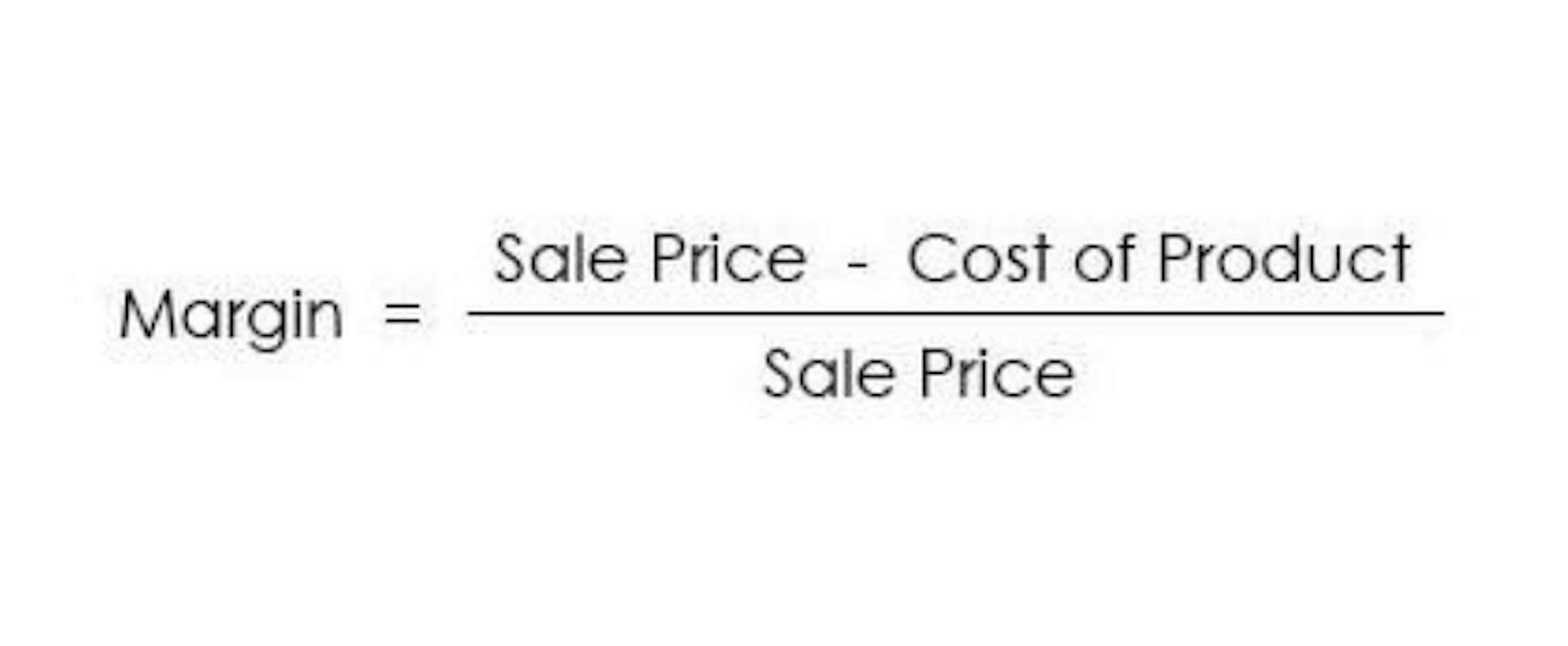
While contribution margins only count the variable costs, the gross profit margin includes all of the costs that a company incurs in order to make sales. Using this formula, the contribution margin can be calculated for total revenue or for revenue per unit. For instance, if you sell a product for $100 and the unit variable cost is $40, then using the formula, the unit contribution margin for your product is $60 ($100-$40). This $60 represents your product’s contribution to covering your fixed costs (rent, salaries, utilities) and generating a profit. The difference between fixed and variable costs has to do with their correlation to the production levels of a company.
This concept is especially helpful to management in calculating the breakeven point for a department or a product line. Management uses this metric to understand what price they are able to charge for a product without losing money as production increases and scale continues. It also helps management understand which products and operations are profitable and which lines or departments need to be discontinued or closed. The concept of this equation relies on the difference between fixed and variable costs. Fixed costs are production costs that remain the same as production efforts increase.
By downloading this guide, you are also subscribing to the weekly G2 Tea newsletter to receive marketing news and trends. You can’t run a business without knowing what makes you money and what drains it. A financial professional will offer guidance based on the information provided and offer a no-obligation call to better understand your situation. Someone on our team will connect you with a financial professional in our network holding the correct designation and expertise. Our writing and editorial staff are a team of experts holding advanced financial designations and have written for most major financial media publications.
Yes, the Contribution Margin Ratio is a useful measure of profitability as it indicates how much each sale contributes to covering fixed costs and producing profits. Profit margin is calculated using all expenses that directly go into producing the product. The contribution margin can help company management select from among several possible products that compete to use the same set of manufacturing resources. Say that a company has a pen-manufacturing machine that is capable of producing both ink pens and ball-point pens, and management must make a choice to produce only one of them.
Some income statements report net sales as the only sales figure, while others actually report total sales and make deductions for returns and allowances. Either way, this number will be reported at the california gas guzzler tax top of the income statement. Suppose you’re tasked with calculating the contribution margin ratio of a company’s product.
For example, analysts can calculate the margin per unit sold and use forecast estimates for the upcoming year to calculate the forecasted profit of the company. Knowing how to calculate the contribution margin is an invaluable skill for managers, as using it allows for the easy computation of break-evens and target income sales. This, in turn, can help people make better decisions regarding product & service pricing, product lines, and sales commissions or bonuses. The product revenue and number of products sold can be divided to determine the selling price per unit, which is $50.00 per product.
11 Financial may only transact business in those states in which it is registered, or qualifies for an exemption or exclusion from registration requirements. 11 Financial’s website is limited to the dissemination of general information pertaining to its advisory services, together with access to additional investment-related information, publications, and links. Finance Strategists has an advertising relationship with some of the companies included on this website.
It’s also a helpful metric to track how sales affect profits over time. If the contribution margin for an ink pen is higher than that of a ball pen, the former will be given production preference owing to its higher profitability potential. Such decision-making is common to companies that manufacture a diversified portfolio of products, and management must allocate available resources in the most efficient manner to products with the highest profit potential. It represents the incremental money generated for each product/unit sold after deducting the variable portion of the firm’s costs. In 2022, the product generated $1 billion in revenue, with 20 million units sold, alongside $400 million in variable costs.

You can calculate the contribution margin by subtracting the direct variable costs from the sales revenue. The contribution margin represents the revenue that a company gains by selling each additional unit of a product or good. This is one of several metrics that companies and investors use to make data-driven decisions about their business. As with other figures, it is important to consider contribution margins in relation to other metrics rather than in isolation. A key characteristic of the contribution margin is that it remains fixed on a per unit basis irrespective of the number of units manufactured or sold.
Now, divide the total contribution margin by the number of units sold. Instead of doing contribution margin analyses on whole product lines, it is also helpful to find out just how much every unit sold is bringing into the business. The profitability of our company likely benefited from the increased contribution margin per product, as the contribution margin per dollar increased from $0.60 to $0.68. Next, the CM ratio can be calculated by dividing the amount from the prior step by the price per unit. In effect, the process can be more difficult in comparison to a quick calculation of gross profit and the gross margin using the income statement, yet is worthwhile in terms of deriving product-level insights.
All such information is provided solely for convenience purposes only and all users thereof should be guided accordingly. Shaun Conrad is a Certified Public Accountant and CPA exam expert with a passion for teaching. After almost a decade of experience in public accounting, he created MyAccountingCourse.com to help people learn accounting & finance, pass the CPA exam, and start their career. Managerial accountants also use the contribution margin ratio to calculate break-even points in the break-even analysis. Here, we are calculating the CM on a per-unit basis, but the same values would be accounting services for startups obtained if we had used the total figures instead. As the first step, we’ll begin by listing out the model assumptions for our simple exercise.
However, if there are many products with a variety of different contribution margins, this analysis can be quite difficult to perform. The contribution margin represents how much revenue remains after all variable costs have been paid. It is the amount of income available for contributing to fixed costs and profit and is the foundation of a company’s break-even analysis. The contribution margin ratio, often abbreviated as “CM ratio”, expresses the residual profits generated from each unit of product sold, once all variable costs are subtracted from product revenue.
Knowing how to calculate contribution margin allows us to move on to calculating the contribution margin ratio. To get the ratio, all you need to do is divide the contribution margin by the total revenue. It is the monetary value that each hour worked on a machine contributes to paying fixed costs. You work it out by dividing your contribution margin by the number of hours worked on any given machine. A contribution margin analysis can be done for an entire company, single departments, a product line, or even a single unit by following a simple formula. The contribution margin can be presented in dollars or as a percentage.
These cost components should not be considered while making decisions about cost analysis or profitability measures. The calculation of the contribution margin ratio is a three-step process. We’ll next calculate the contribution margin and CM ratio in each of the projected periods in the final step. To perform a more detailed analysis on either a quarterly or year-over-year (YoY) basis – or comparisons to comparable companies operating in the same industry – the CM metric can be divided by revenue to get the CM ratio. All else being equal, the greater the contribution margin (CM) of each product, the more profitable the company is going to be, with more cash available to meet other expenses. Given how the CM examines the product-level breakdown of each dollar that comes in and how it contributes to generating profit, the break-even point (BEP) cannot be calculated without determining the CM.
For this section of the exercise, the key takeaway is that the CM requires matching the revenue from the sale of a specific product line, along with coinciding variable costs for that particular product. For a quick example to illustrate the concept, suppose there is an e-commerce retailer selling t-shirts online for $25.00 with variable costs of $10.00 per unit. The calculation of the metric is relatively straightforward, as the formula consists of revenue minus variable costs. While there are various profitability metrics – ranging from the gross margin down to the net profit margin – the contribution margin (CM) metric stands out for the analysis of a specific product or service.
Poradmin

Therefore, by making purchases at year-end, the cost of any purchase will be included in the cost of goods sold. It is worth remembering that under LIFO, the latest purchases will be included in the cost of goods sold. As noted already, at least a portion of the inventories valued under LIFO is priced at the firm’s early purchase prices; this might go back to the date when LIFO was adopted. The result of this decline was an increase in earnings and tax payments over what they would have been on a FIFO basis.
Prior to joining the team at Forbes Advisor, Cassie was a content operations manager and copywriting manager. With first in, first out (FIFO), you sell the oldest inventory first—and with LIFO, you sell the newest inventory first. The cost of the remaining items under FIFO is $5,436; under LIFO the cost is $4,800. With LIFO, the purchase price begins with the most recently purchased goods and works backward. The articles and research support materials available on this site are educational and are not intended to be investment or tax advice. All such information is provided solely for convenience purposes only and all users thereof should be guided accordingly.
When the inventory units sold during a day are less than the units purchased on the same day, we will need to assign cost based on the previous day’s inventory balance. It’s good as it results in a lower recorded taxable income, giving businesses a lower tax bill. This can also be a negative for some companies, since lower reported profits may not be appealing to investors. Most companies that use LIFO inventory valuations need to maintain large inventories, such as retailers and auto dealerships.
When materials are returned from the factory to the storeroom, they should be treated as the most recent stock on hand. Last In First Out (LIFO) is the assumption that the most recent inventory received by a business is issued first to its customers. If you’re new to accountancy, calculating the value of ending inventory using the LIFO method can be confusing because it often contradicts commission vs salary the order in which inventory is usually issued. She enjoys writing about a variety of health and personal finance topics. When she’s away from her laptop, she can be found working out, trying new restaurants, and spending time with her family.
Last-in First-out (LIFO) is an inventory valuation method based on the assumption that assets produced or acquired last are the first to be expensed. In other words, under the last-in, first-out method, the latest purchased or produced goods are removed and expensed first. Therefore, the old inventory costs remain on the balance sheet while the newest inventory costs are expensed first. Most companies use the first in, first out (FIFO) method of accounting to record their sales. The last in, first out (LIFO) method is suited to particular businesses in particular times.
We’ll use an example to show how FIFO and LIFO produce different inventory valuations for the same business. This makes it easy for business owners to manage their accounting and makes it simple for investors to interpret the financial statements. FIFO is an accepted method under International Financial Reporting Standards. The rate of inflation impacts the size of the tax differential created by FIFO and LIFO. Under a high-inflation economy, using FIFO results in a significantly lower COGS, leading to a higher taxable income and tax bill.

A company generates the same amount of income and profits regardless of whether they use FIFO or LIFO, but the different valuation methods lead to different numbers on the books. This can make it appear that a company is generating higher profits under FIFO than if it used LIFO. Last in, First Out (LIFO) is an inventory costing method that assumes the costs of the most recent purchases are the costs of the first item sold.
Although firms can often plan for LIFO liquidation, events sometimes happen that are beyond the control of management. For example, in 2018, a number of sugar companies changed to LIFO as sugar prices rose at a rapid pace. LIFO assumes that the last cost received in stores is the first cost that goes out from stores. After this, the price of the next most recent lot is charged to the job, department, or process. Accountingo.org aims to provide the best accounting and finance education for students, professionals, teachers, and business owners. The periodic system is a quicker alternative to finding the LIFO value of ending inventory.
LIFO is an inventory accounting method used by businesses to value their available inventory stock. It follows the rule that states the most recently acquired or produced items are the first to be sold or used. This means that the cost of goods sold (COGS) on your income statement reflects the cost of the most recent inventory purchases. LIFO, or Last In, First cashflow tracker calculator Out, is a common accounting method businesses can use to assign value to their inventory.